Showing posts with label events. Show all posts

Sunday, March 31, 2013

Antonio “Bigfoot” Silva Promises Second Fight with Cain Velasquez Will Be Much Different

MMA Weekly5 hours ago
When Antonio “Bigfoot” Silva steps into the cage against UFC heavyweight champion Cain Velasquez at UFC 160 on May 25 in Las Vegas, he will be re-matching a man who – at almost a year to the day – gave Silva the worst beating of his eight-year career. Only this time, he knows exactly what he won’t be doing come fight time.
“First thing, no kicks. That is very important,” Silva said recently during a press tour in anticipation of the Memorial Day Weekend meeting with Velasquez.
It’s understandable that Bigfoot doesn’t want to throw kicks against the hulking Mexican-American. In their inaugural meeting, it took about 30 seconds for Velasquez to grab a kick from the Brazilian, rip him to the mat, and beat him senseless by 3:36 of the opening frame.
That loss, on May 26, 2012, was the second consecutive loss for Silva. He was previously knocked out by Velasquez’s teammate and perennial contender Daniel Cormier at the Strikeforce Heavyweight Grand Prix Semifinals in September of 2011. Since those crushing defeats, the six-foot-four, 265-pound Brazilian behemoth has back-to-back knockout victories over the previously undefeated Travis Browne and a vicious “Knockout of the Night” third-round comeback over top-ranked Dutch striker Alistair Overeem at UFC 156 in February.
Despite being 2-2 in his last four fights, Silva is quick to dismiss any criticism of him earning this title shot against Velasquez. For Bigfoot, it’s just simple math.
“I fight two of the best guys in the weight division in the UFC,” he stated. “Travis Browne never lost. He’s a tough guy. And the other guys, Alistair Overeem was number two or three in the world, and if he would have beaten me he was going to fight for the belt.”
By defeating the widely viewed number one contender in Overeem, Silva dispatched of the hype-train that was “Ubereem” and earned the respect of MMA fans across the globe. Silva says that he never had been so enraged at a fighter’s pre-fight trash talk, a feeling that was more than evident when Silva stood over a lifeless Overeem, taunting the former K-1 Grand Prix Champion at the conclusion of their scrap.
“I said, get up! Get up! You don’t want to fight, (expletive)!”
A truly terrifying visual to any of those who had the pleasure (or pain) of watching that fight unfold.
Now with a re-match looming against Velasquez, Silva faces questions about whether or not he will be mustering the same anger that helped fuel his comeback win against Overeem.
“Yes (I’ll be angry),” he said. “The first reason why, is, I want the title.
“And the second thing, every day I get up and look in the mirror (and see) the big cut on my face, for this, I’m very angry.”
After giving Silva 15 stitches in the center of his face, Velasquez went on to reclaim the heavyweight title from Silva’s countryman and sometime training partner, Junior dos Santos, at UFC 155.
“Cigano,” who also was in attendance on Wednesday, had some very poignant advice for his comrade; advice that will surely be elaborated on more as the fight draws near.
“I think he has to put some pressure on him,” said the former heavyweight champion. “You can’t stay waiting too much for Cain Velasquez.
“You have to go there and beat him like this: you have to go in there and put pressure on him. That’s my opinion. We already talked a little bit about this and I truly believe that he will win.”
As the two Brazilians share a massive meal of steak and shrimp, they go back and forth about a myriad of subjects and shared memories. Silva listens intently to dos Santos, but he wants to make one thing clear, although this is a new fight, he won’t be changing his strategy when he meets Velasquez for a second time.
“I’m going to train the same strategy as I trained before,” said Bigfoot. “The problem was my mind, my adrenaline. But I’m going do the same thing. I have a lot of skills to win this fight.”
Like many championship-level fighters, Silva realizes that your losses are just as important as your wins if you’re going to grow as a martial artist.
“The first fight with Cain is very important because I learned a lot from it,” said Silva. “[That] fight, I was very nervous because it was my first fight in the UFC. Now I’m very, very different. I have a good camp. I’m going to do the same strategy, and this fight will be very different.”

Pat Riley's shut-the-bleep-up message to Danny Ainge a show of support for LeBron James

Pat Riley called Celtics general manager Danny Ainge a "whiner." (AP)

Miami Heat emperor Pat Riley isn't responsible for creating the NBA's culture of hard fouls and cheap shots, but no one in its history has profited so handsomely in the pursuit of perfecting it.
In honoring two historically indisputable professional habits – establishing himself as the patriarch and protector of his star player; and wrapping himself in downright disdain for the Boston Celtics – Riley sent a missive to one of his messengers on Good Friday.
"Danny Ainge needs to shut the [expletive] up and manage his own team," Riley proclaimed. "He was the biggest whiner going when he was playing and I know that because I coached against him."
This was a spectacularly jarring response to Ainge, who had chastised LeBron James and his declaration that the NBA and its officials don't do enough to protect him. "I think that it's almost embarrassing that LeBron James would complain about officiating," Ainge had told WEEI radio in Boston.
For Ainge, he has been his vintage self: agitating, inciting, inspiring an irrational over-the-top response. If Riley's response feels unprecedented, remember something: The re-recruitment of James to re-sign in 2014 is underway, and this was Riley's way to back his franchise star. Even so, Riley's never needed a noble reason to grandstand. When it serves his agenda, no one steps down off Olympus and delivers the arrows like him.

In a season when James had manufactured no storylines beyond the perpetual testimonials about the greatness of his game, his venting in Chicago on Wednesday night promises to be the beginning of the framing of how he'll be officiated in these playoffs.
This is a copycat league, and this episode will turn out to be one more way in which Bulls coach Tom Thibodeau has become the most mimicked of all.


Ainge criticized LeBron James for complaining about opponents' hard fouls. (AP)


When Golden State Warriors coach Mark Jackson wanted to install a defense, he made young assistant Darren Erman – a Thibodeau disciple in Boston – his defensive coordinator. The improvement's been dramatic. And when teams want to defend James, they'll study Thibodeau's blueprint.
Of course, everyone doesn't have the Bulls' personnel to be physical with James, nor the ferocious defensive mindset within their players. Still, Thibodeau is stubborn and he'll never let his players back down to James and the Heat. So stubborn, in fact, Thibodeau still hasn't signed the four-year, $17.5 million-plus contract extension that Bulls commemorated with an Oct. 1 news conference.
"The deal's done," Thibodeau told Yahoo! Sports on Wednesday night. Nevertheless, he wouldn't acknowledge that it had been signed because that still hasn't happened, several sources with direct knowledge of the contract told Y! Sports.
This is how Thibodeau operates, part of his maddening genius. He wears everyone down until he gets everything he wants – front offices, players, and often opponents too.

Back in his assistant coaching days in Boston, his contracts lingered unsigned, too. Looking back, no one is sure that Thibodeau ever signed the waiver confirming that he'd never sell his personal engraved 2008 championship ring when those were handed out to staff.
In the end, remember something: Thibodeau is a disciple of Jeff Van Gundy, who is a disciple of Riley. Deep down, Riley understands something: the way with which those Bulls engaged James to end that 27-game winning streak had been the ultimate tribute to Riley himself. Thibodeau sent those Bulls hard for James, and it stirred something within the NBA's MVP that no one had heard out of him this season.


James wasn't happy with the officiating in the Heat's loss to the Bulls. (AP)

James is a product of a different day in the NBA, a different generation and the evolution of the sport spared him the beatings delivered in the 1980s and '90s. Nevertheless, how James is officiated is an issue for the NBA this season and beyond. That's been true forever with the league's best players, and always will be.
More and more, the league office has made life easier for offensive stars – legislating easier paths to scoring, punishing hard fouls with free throws, fines and suspensions. Once, David Stern changed the rules to make it harder for the Chuck Dalys and Rileys to beat up on Michael Jordan.
Now, it will be Adam Silver's turn with James. Make no mistake: James and his inner circle have a strong relationship with Silver, who'll replace Stern as the NBA's commissioner in 2014. Silver is so fond of James' business manager Maverick Carter, he granted an interview with Forbes to render some fluffy quotes for a profile on Carter.
Stu Jackson has long overseen basketball operations for the NBA, but he's begun the pursuit of returning to the front office of a team, sources told Yahoo! Sports. The restructuring of the league office could ultimately be dramatic, and those within the NBA are watching closely to understand how it'll eventually trickle down to the product on the floor.

In the end, Riles' statement was one for the history books, one of the best two-sentence releases pro sports has ever seen. Riley needs enemies, and the Celtics and Ainge will forever play the part for him. At the highest levels, the Celtics and Heat share a visceral hatred and that's increasingly rare in this buddy-buddy era.
After a Game 2 loss to Miami in the Eastern Conference finals in May, Ainge cornered the NBA's vice president of referee operations, Joe Borgia, in an American Airlines Arena corridor and tried to understand how James could go to the free throw line 24 times, the Heat 47.
Just trying to break free, Borgia finally blurted to Ainge, "I'm sure we missed five or six calls somewhere."
Boston believes Dwyane Wade went out of his way to hurt Rajon Rondo with a tackle that dislocated his elbow in the 2011 Eastern Conference playoffs. And, of course, there was the Heat's successful free-agent recruitment of Ray Allen last summer.
So, yes, James spoke out about all those non-basketball plays that have endangered him this season, borne out of a night when Thibodeau had his players honoring the lessons that Riley had taught Thibs' own mentor, Van Gundy, so long ago.

And upon stepping out of the shadows on Good Friday, as much as Pat Riley was taking shots at the Celtics GM and defending his own superstar player, he had done something else too: Riley took a bow.
They're all coming for James, coming harder and harder. Remember that it was the emperor of these Miami Heat who taught them all how to do it, who glamorized the hard foul and the cheap shot and the culture that comes for LeBron James now.

Saturday, March 30, 2013

Sunderland 0-1 Manchester United: Bramble own goal sees leaders grab seventh-straight league win

Manchester United sealed its seventh consecutive league victory to inch ever closer towards the club's 20th Premier League title thanks to a 1-0 victory at Sunderland. The hosts battled hard throughout but the Red Devils were ultimately comfortable and a first half own goal from Titus Bramble was all that was needed to secure the win.

Sunderland made four changes to the side that struggled to a 1-1 draw at home to Norwich. Stephane Sessegnon was declared fit to start up front alongside Danny Graham after top scorer Steven Fletcher was ruled out for the rest of the season.

Sitting pretty at the top of the Premier League, Sir Alex Ferguson rotated his squad ahead of their FA Cup quarterfinal replay with Chelsea on Monday with the likes of Rio Ferdinand, Wayne Rooney and Ryan Giggs left out.

Martin O'Neill may have been recently accused of lacking spark but his team certainly came roaring out of the blocks, forcing David de Gea into a couple of decidedly shaky clearances in the first five minutes. However, it did not take long for the visitors to assert their authority on proceedings and they could have gone ahead on 11 minutes when full back Alex Buttner bundled his way into the box only to be denied by Simon Mignolet.

Sunderland's early fire was well and truly extinguished on 26 minutes when Robin Van Persie cleverly turned away from Phil Bardsley and arrowed a shot that had been heading wide only for Titus Bramble to deflect it into his own net.

The lead could have been doubled before half-time when first Anderson burst onto a quick-fire United counter-attack but just failed to get the better of Bramble before a confident-looking Van Persie stung the hands of Mignolet with a wicked curling free kick.

For all of Sunderland’s bluster and effort there appears to be a distinct lack of both quality and confidence running through the Stadium of Light at the moment. The start of the second half proved no different to the first as some early Mackems running was let down by poor decision making in the final third, with Adam Johnson a particular culprit.

On the hour Danny Graham showed good speed to negotiate a way past Nemanja Vidic but Sessegnon could not quite get his head to the ball ahead of Jonny Evans. From the resulting corner, David de Gea confidently punched clear but clattered into Vidic in the process to leave him needing medical attention.

The hosts suddenly had some momentum and roared on by their vociferous home support, proceeded to have their best spell of the match. It was nearly capped with an equalize but Chris Smalling defended superbly to stop Graham from nodding in a Johnson cross.

With 10 minutes to play, Buttner and Van Persie were both denied again by a sprawling Mignolet save as United closed in on the three points and a tiring Sunderland could not find an equalizer despite six minutes of stoppage time.

Three Periods: Flames fumbled Jarome Iginla for years; Sharks test trade waters; 'Canes comfy with Alex Semin gamble

FIRST PERIOD: Flames fiddled around with Jarome Iginla for far too long


Former Flames captain Jarome Iginla at his farewell press conference in Calgary. (Reuters)


The Calgary Flames should be embarrassed. Deeply, deeply embarrassed. Because this goes beyond the obvious – that they waited far too long to trade captain and icon Jarome Iginla, that they let one team believe a deal was done only to have him waive his no-trade clause for another team, that they got far too little in return. Let’s not lose sight of why they had to trade Iginla in the first place.

This has been a misguided and mismanaged franchise for years, and it certainly didn’t start with current general manager Jay Feaster, who presided over this shortly after the Ryan O’Reilly offer sheet fiasco. The blame reaches back to former GM Darryl Sutter – which has to just burn Flames fans, who watched him come out of his Alberta exile last season and win the Stanley Cup as coach of the Los Angeles Kings. It extends to team president Ken King and up to chairman Murray Edwards.

Bad drafts. Bad trades. Bad signings. Bad decisions in so many areas for so many years. The Flames didn’t just waste Jarome Iginla as an asset. They wasted Jarome Iginla as a player. A good organization would have recognized reality – that this was not a playoff team, let alone a potential Cup contender – and would have moved Iginla long ago in a smart way to start the rebuild. A better organization wouldn’t have had to move Iginla at all because it would have actually built a playoff team around him.


Iginla had a no-trade clause and was close to Edwards. He loved Calgary and was beloved by Calgary. Maybe he was just as delusional and stubborn as management, and maybe all that made him more difficult to trade. At a news conference Thursday, he wouldn’t rule out coming back to the Flames, saying: “I think the organization is going in the right direction.” He slipped and still called the Flames “we.”

But it was not Iginla’s job to make tough decisions, and it was not his job to surround himself with talent. It was his job to lead and perform, and his loyalty and class helped make him more than just a star player. He did his part even as he aged and his teammates struggled, all his numbers going for naught.

Iginla scored 32 goals at age 32 in 2009-10, when the Flames didn’t make the playoffs. He scored 43 goals at age 33 in 2010-11, when the Flames didn’t make the playoffs. He scored 32 goals at age 34 last season, when the Flames didn’t make the playoffs. And he has nine goals in 31 games at age 35 this season – a 22-goal pace over an 82-game schedule – with the Flames out of playoff position yet again.

Had the Flames decided to trade Iginla a year or two ago, they could have done this the right way. They could have worked with Iginla to create a market that would reap a decent return, and theoretically the assets they acquired would be paying dividends by now. It would have been brutal, but it could have been dignified and productive. Most fans and media would have understood. Many were calling for it.


By waiting, they ended up stuck – under pressure to do something with Iginla on an expiring contract, with Iginla in control because of his no-trade clause. The Boston Bruins offered the best deal, even if it wasn’t great, and the Flames agreed to it. But Iginla picked the Pittsburgh Penguins, who offered even less than the Bruins did, and so the Flames had to accept only a late first-rounder and what experts consider two C-list college prospects. They are not going to start a rebuild with that.

But worst of all, by managing the team so poorly after their run to the Cup final in 2004, they squandered the back end of Iginla’s prime and made their captain the subject of trade rumors for years, testing his character in all sorts of uncomfortable situations.

Could they have refused to trade Iginla to Pittsburgh and tried to force him to Boston to get the best return? Could they have refused to trade him at all? Maybe. But they’re the ones who gave him the no-trade clause, they’re the ones who put him in this position, and they’re the ones who would have looked classless, not just clueless, had they tried to play hardball. And what if they alienated him so much that he left for nothing as a free agent?

Failure begets failure. Even though the Flames have finally recognized the need to rebuild and finally traded Jarome Iginla, there is no reason to believe they are about to break the cycle. Their future looks as bleak as ever.

They’re lucky Iginla wanted to stay for so long. It’s incredible he won’t rule out coming back. You’d think it would have been Iginla asking for a trade, not the other way around.

SECOND PERIOD: Sharks test the water ahead of NHL trade deadline


The Sharks have some big decisions on the eve of the NHL trade deadline. (Getty)


Listen to what San Jose Sharks GM Doug Wilson said Monday after trading defenseman Douglas Murray to the Penguins: “Can it lead to other deals? Sure, it can. There are certainly a lot of teams that are in contact with us.”

Wilson said it was “not acceptable” how the Sharks had played after their 7-0-0 start, and he made it clear that their performance before the trade deadline would have a great impact on what he decided to do.

“They’re all big boys,” Wilson said. “They know what’s on the line here. To me, actions speak louder than words. Play well. Let us know where you’re at with your game. … I’d like to see us over the next little while in particular step up our game. There’s no reason why we can’t.”

Well, look what has happened since: The Sharks have won back-to-back games over the Anaheim Ducks, the second-ranked team in the Western Conference. They won on the road, and they won at home. They won by a combined score of 8-3, when their biggest issue has been a lack of offense.

So now what? Should Wilson read too much into that, considering the Ducks have now lost four straight?

The Sharks entered Thursday night in eighth place in the West. They had three more games before the deadline – Thursday night against the Detroit Red Wings, Saturday night against the Phoenix Coyotes and Monday night against the Vancouver Canucks, all at home.

Can they show Wilson enough to keep this group together?

Change is coming, whether it’s now or in the near future. Veteran forwards Ryane Clowe and Michal Handzus, who have combined for only one goal this season, are pending unrestricted free agents. Veteran stars Joe Thornton, Patrick Marleau and Dan Boyle all have one year left on their contracts. By design.

“We knew that this window would be getting here, or this time, if you look at how our contracts are structured, what we have in committed dollars,” Wilson said. “We don’t use the world ‘rebuild,’ because that classically means six, seven years. … We like to use the term of ‘reset and refresh.’ ”


The Sharks have players to reset and refresh around: Antti Niemi in goal; Brent Burns on defense, when he’s not moonlighting at forward; Logan Couture and Joe Pavelski up front. But now might be the time to part with players like Clowe and Boyle, and they need to make decisions soon on players like Thornton and Marleau, the two who have been cornerstones.

Wilson supported coach Todd McLellan and his staff. He said the coaches have addressed the areas management wanted – penalty killing, goals against, play around the net. When the Sharks play the way they’re supposed to, they play well. But they have struggled to score and perform consistently.

“Do I think that’s coaching preparation? No,” Wilson said. “I think it comes down to players sticking with it, not altering our approach to a game just because we’re down a goal or whatever. … The offensive side, it’s hard to fathom. We’ve got some guys that have been goal-scorers in this league that all went dry at the same time, or guys that were scoring at a very high clip before …”

He did not finish his sentence. He did not identify Marleau, who scored nine goals in his first five games but has seven since. He didn’t need to.

“This is coming to crunch time,” Wilson said. “We’ve had some inconsistency. If you look at any teams that have separated themselves from the pack, they’ve played by committee. They’ve played strong defense. They’ve created some offense and played a consistent approach to it. We haven’t done that. We need to do that now. …

“We have a pretty clear, concise plan. We knew as we were entering into this timeframe – whether it be now or this summer – exactly how we were going to execute that plan, and I guess the timing is dictated by performance.”

THIRD PERIOD: Carolina comfortable with all-in gamble on enigmatic Alex Semin


Alex Semin didn't take long to convince Carolina that he was worth the risk of a long-term deal. (USA Today)

Jim Rutherford understands your skepticism.

Alex Semin signed three straight one-year contracts – two with the Washington Capitals, then one with the Carolina Hurricanes. He is known for offensive production, but not for showing up every night.

Yet after only 30 games with the ’Canes, less than half a full season, Rutherford, a GM who used to avoid in-season extensions, gave Semin a five-year, $35 million contract.

And he did so knowing full well how difficult it will be to fit a $7 million cap hit into his budget, not just because the cap will come down to $64.3 million next season, but because Carolina doesn’t spend to the cap, anyway.

“I’ve added seven million to our payroll next year,” said Rutherford, who put Jussi Jokinen on waivers this week, hoping someone would take his $3 million cap hit for the rest of this season and next, only to watch him clear. “I’ve got to start to figure out ways that we can get our payroll in better line with what our business does.”

Let him explain:

The Hurricanes gave Semin a one-year deal initially because they simply didn’t know him. They knew both his ability and his reputation, but they wanted to give him a clean slate. Could he play in their system? Would he like coach Kirk Muller, and would Muller like him?

“When we did the one-year deal, it was with hopes that this would work,” Rutherford said. “And it has worked for us.”

Semin has eight goals and 30 points in 31 games. That’s a 21-goal, 79-point pace for a full 82-game schedule. Just as important, he has boosted the totals of Eric Staal and Jiri Tlusty, giving the Hurricanes an excellent first line. He has clicked with Staal better than anyone since Cory Stillman, Staal’s right winger when the ’Canes won the Cup in 2006.

“Alex gets Eric the puck more than he’s ever gotten it,” Rutherford said.

Semin is also plus-15, even though he was minus-5 over the past three games.

“People view him as an offensive player, but he’s done some things in games defensively that’s saved the game for us,” Rutherford said. “He’s played the game at both ends of the rink.”


But what about the small sample size? Isn’t Rutherford worried Semin will start coasting now that he has security? And why has Rutherford started giving extensions during the season?

“I believe with a player like this, if you wait too long, you could very well miss an opportunity,” Rutherford said. “I can tell you that I’ve had two teams in particular – and I can add another, more in a casual way – that asked if we were going to re-sign Alex or if we would consider trading him.

“So once I get those calls, and there’s other teams thinking about it now, the judgment call becomes more, do you make that decision after 30 games based on what you’ve seen, or do you also factor in how far you can run the risk until you get closer to free agency?”

More teams are locking up their key players, which means fewer key players are reaching the free-agent market, which means they are more difficult to replace. So more teams are locking up their key players, creating a snowball effect.

That’s why Rutherford changed course last year and locked up Tuomo Ruutu, and that’s why he locked up Semin. Had he let Semin hit the market, he likely would have lost him. Had he lost him, he likely would not have found an equivalent replacement. Had he not found an equivalent replacement, what would have happened to his first line?

“I think that if a team decides they want a player – certainly if we decide we want a player – we’re going to jump in and do it before the season’s over instead of waiting now,” Rutherford said, “because it becomes a lot riskier.”

Even riskier than giving Alex Semin a rich, long-term deal.

If only Jarome Iginla were the only issue in Calgary.


Does Miikka Kiprusoff intend to play the final year of his contract? (USA Today)


Defenseman Jay Bouwmeester has a no-trade clause and one year left on his contract at $6.68 million. He could, and should, be asked to go if the Flames can get something decent in return for him.

Goaltender Miikka Kiprusoff does not have a no-trade clause, but he reportedly will retire rather than play the final year of his contract if the Flames try to move him. That’s ostensibly because he and his wife just had a baby.

But Mike Keenan has said the Flames and Kiprusoff had a mutual understanding that he wouldn’t play the last year of his contract, anyway. Keenan was the Flames coach when they signed Kiprusoff to a six-year, $35 million deal with the following structure: $8.5 million, $7 million, $7 million, $6 million, $5 million, $1.5 million.

The last year seems phony, tacked on to lower the cap hit to $5.833 million. That’s why the NHL fought to outlaw back-diving contracts in the new collective bargaining agreement. And Keenan’s comments seem to prove cap circumvention. But will the NHL take action? Probably not, and certainly not at this point.

League officials aren’t naive. It’s likely the Flames and Kiprusoff considered the idea he might retire before the end of his contract. But even though Keenan was their coach then, he is now a media personality and his comments alone aren’t enough to establish a pre-existing agreement that Kiprusoff would not play the last year of the deal. The NHL will at least see what Kiprusoff actually does before exploring it further or making any judgments.

SHOOTOUT: Last shots from around the NHL

— The NHL continues to work on ways to keep the Coyotes in Glendale, Ariz. But the league does not know if any of them will work, and this has been going on for years. Relocation has to be considered. But will the league make a decision before the playoffs? Not necessarily. It depends on the progress that is made – or is not made – in the coming weeks. Deputy commissioner Bill Daly said the NHL’s “current focus remains on selling the Coyotes to ownership in Glendale. We haven’t spent much time on anything else.”


— Eric Staal had 24 goals, 70 points and a minus-20 rating in 82 games last season. He has 14 goals, 35 points and a plus-16 rating in 31 games this season. Three reasons: his own determination to improve, his chemistry with Semin and his brother Jordan’s arrival from Pittsburgh. Eric still faces the toughest matchups as the No. 1 centerman, but Jordan takes a lot of pressure off him as the No. 2. “When you’re rolling two 6-foot-4 centericemen back to back, that gives a guy a comfort level,” Rutherford said. “Jordan’s eating up a lot of minutes. He’s playing over 20 minutes a game, and he’s done a good job for us despite the fact he’s playing with a whole lot of different guys. But we’ll get that straightened out here when we get everybody healthy.”

— Now that the Tampa Bay Lightning has fired coach Guy Boucher, the heat is on GM Steve Yzerman. He has been through struggles before as a player and executive, but this is perhaps the first time he has been singled out and blamed, at least to this degree, for his team’s failures. He might have made a good hire in Jon Cooper, but it remains to be seen whether Cooper is just the next Guy Boucher, a well-regarded, up-and-coming coach with no NHL experience. Like Boucher, Cooper won’t succeed unless Yzerman gives him better goaltending, a more mobile defense and increased scoring depth. One thing about Yzerman, though. He works hard, relishes challenges and never gives up.

Tuesday, March 26, 2013

Hamlin has compression fracture in lower back

By JENNA FRYER (AP Auto Racing Writer) | The Associated Press12 hours ago
Denny Hamlin suffered a compression fracture in his lower spine during a last-lap crash while racing for the win against former teammate Joey Logano, and Joe Gibbs Racing gave no indication Monday how long its driver could be sidelined.
 
''I just want to go home,'' Hamlin tweeted from a hospital in Southern California. He later posted a photo of himself giving a thumbs-up and appeared to be wearing a back brace.

The team said he had what is called an L1 compression fracture; essentially, the first vertebra in the lumbar section of his spine collapsed.

Hamlin was released from the hospital Monday night, and JGR said he'd return to North Carolina to be evaluated by Dr. Jerry Petty of Carolina Neurosurgery and Spine Associates. A reporter from USA Today spoke to Hamlin outside the hospital and reported Hamlin, wearing a back brace, walked out on his own.

NASCAR does not race this weekend, but returns to action April 7 at Martinsville Speedway, where Hamlin, who is 10th in the Sprint Cup standings, is a four-time winner.

Hamlin was airlifted from the Fontana track after a collision with Logano sent him nearly head-on into the inside wall in a place where Auto Club Speedway does not have energy-absorbing SAFER barriers. There are barriers on the inside of some of the walls, but portions of the track between Turns 1 and 2 and Turns 3 and 4 are not protected.

Track spokesman David Talley said Monday the SAFER barriers are installed upon NASCAR's recommendation, and track officials will wait to see what, if anything, NASCAR recommends after Hamlin's accident.

''NASCAR is reviewing the incident and any improvements that can be made, will be made,'' Talley said. ''If NASCAR feels that additional SAFER Barriers are needed, then we will absolutely make those enhancements. SAFER barrier recommendations are based on past history and this is a situation we, nor NASCAR has ever seen at this track before.''

IndyCar last year returned to Auto Club Speedway for the first time since 2005 and the season finale is scheduled to be held at the track in October.

But the issue of the SAFER barriers and Hamlin's impact seemed to be overshadowed by the most recent flare-up in this new feud.

Logano managed to finish third despite wrecking into the outside wall after hitting Hamlin, who spun Logano last week at Bristol to spark a bitter post-race confrontation.

Because of the recent bickering between the former teammates, Logano was somewhat defiant after Sunday's accident.

''He probably shouldn't have done what he did last week, so that's what he gets,'' Logano said.

On Monday, Logano's car owner said the driver was unaware of Hamlin's condition when he made the comment during a television interview.

''That's a tough thing, Joey had no idea what the situation was with Denny when he was doing the interview,'' Roger Penske said. ''It's one of those things that came out and taken out of context isn't what he meant. He can't take it back, but people are certainly blowing that up to mean something different than what he knew at the time.''

Tony Stewart also got into a post-race shoving match with Logano, who aggressively blocked Stewart on a late restart. Stewart claimed Logano threw a water bottle at him when he approached, but crews separated the two before it turned into a full fight.

Stewart later railed against the 22-year-old Logano in several interviews and accused him of being ''nothing but a little rich kid that's never had to work in his life.''

Logano was 18 when he broke into NASCAR with Joe Gibbs Racing in 2008 with the nickname ''Sliced Bread.'' He'd risen rapidly through the racing ranks with the financial backing from his father, Tom, who used funds from the family's Connecticut waste management company to help his two children pursue their dreams.

Logano had the means to pursue a racing career, and was in Georgia racing quarter midgets at the age of 6 while his older sister chased a life of competitive ice skating.

But Tom Logano's near-constant presence at the NASCAR races hurt Logano's reputation, and him angrily demanding his son go after Kevin Harvick after a 2010 incident at Pocono only made things worse.

On Monday, Patricia Driscoll, girlfriend of Kurt Busch, referred to Logano as (hash)TrustFundRacer in a series of tweets that accused him of reckless racing with ''no less than 5 drivers.''

''We were lucky that none of the others were hurt by his actions,'' Driscoll tweeted.

An agitated Penske thought the criticism of Logano's upbringing was out of line.

''He's a solid young man and his family has supported him in racing as many families of professional athletes do in every sport,'' Penske said. ''Anyone who looks at that as a criticism, to focus on that is just petty.''

He also said he supported his driver, who signed last year to join the Penske Racing organization as teammate to defending Sprint Cup Series champion Brad Keselowski.

''Listen, Joey is a great driver and what happened at the end there wasn't anything more than hard racing,'' Penske said. ''I stand behind him and I think he's going to go down as one of the greatest drivers to ever race.''

It never developed at JGR, where Logano replaced Stewart in 2009 and was teammates with Busch and Hamlin. Signs of a rift between Hamlin and Logano didn't show publicly until after this year's season-opening Daytona 500, when the two exchanged barbs on Twitter.

Then came an on-track incident at Bristol last week, more exchanges on Twitter, and finally their last-lap battle for the win at Fontana. Although the crash seemed to be a result of hard racing, Logano's lack of empathy immediately after the race gave the impression his contact with Hamlin was intentional.

Hamlin got himself out of the car, but then slumped to the ground beside it before an ambulance arrived. He was eventually airlifted out due to traffic around the track.

The injury is a bit more common in open-wheel racing, which has had three incidents of drivers breaking their backs since 2009.

Will Power broke several vertebrae in his lower back in a 2009 crash during practice at Sonoma and missed that event and the final three races of the season. He couldn't train for two months and wore a back brace for almost four months.

He also suffered a compression fracture of his fourth thoracic vertebra in the 2011 season finale at Las Vegas but missed no racing as he healed during the offseason.

Justin Wilson fractured his fifth thoracic vertebra in 2011 and missed the last six races of the season. Wilson said he was in a back brace for 10 weeks.

Three-time Indianapolis 500 winner Dario Franchitti fractured the L1 vertebra in his back in a 2003 motorcycle accident. He needed surgery and was out of a race car for almost nine months.

In NASCAR, Sterling Marlin missed the last seven races of the 2002 season with a fractured vertebra in his neck.


Ovechkin, Backstrom, Kadri named NHL's 'Three Stars'

By The Sports Xchange | The SportsXchange20 hours ago
The NHL announced Monday that Washington Capitals left wing Alex
Ovechkin, Minnesota Wild goaltender Niklas Backstrom and Toronto Maple
Leafs center Nazem Kadri were named the league's "Three Stars" of the week.
Ovechkin led the league with five goals and eight points in four games. He has scored in five straight games overall. He combined for five points in back-to-back games at the Winnipeg Jets. He had a goal and two assists on Thursday and two goals on Friday.
Ovechkin leads Washington with 16 goals in 32 games and is second with 31 points.
Backstrom went 3-0-0 last week with a 1.00 goals-against average, .972 save percentage and one shutout as the Wild extended their win streak to a season-best five games. He combined for 104 saves over last week's games, including a season-high 36 against the host Detroit Red Wings on Wednesday.
Backstrom is second in the NHL with 16 wins this season with a 2.23 goals-against average and .921 save percentage in 25 games.
Kadri tallied seven points in three games with three goals and four assists. He had a career-best three assists and had a plus-3 rating in a 4-2 win over the Tampa Bay Lightning on Wednesday. He followed that up with two goals and an assist in a 5-4 shootout loss at the Buffalo Sabres on Thursday.
Kadri leads Toronto with 34 points in 32 games. He is tied for the team lead with 14 goals and 20 assists.


Penguins paid dearly for run-down version of Brenden Morrow – and it's the right move

yahoosprts.com


The Pittsburgh Penguins did not trade for Brenden Morrow, at least not the Brenden Morrow we remember. They did not acquire the kid who went to the Stanley Cup final in 2000, the captain who carried his team to the conference final in 2008, the Olympian who won gold in 2010 or the guy who scored 33 goals in 2010-11.


Brenden Morrow had been in Dallas his entire career, arriving the season after the Stars won the Cup in 1999. (USA …


They traded for a player who is 34, an old 34, someone who has racked up the mileage, who has slowed down considerably, who has slipped as low as the fourth line this season. There are legitimate questions about how much this Brenden Morrow has left.

But that’s OK. Even at the price they paid.

Because the Penguins knew what they were getting and what they were giving up, and this is what you do in today’s market to make a run at the Stanley Cup, if you have put yourself in position to do so.

They don’t need a captain or a top scorer; they need a complementary piece to fill a specific role.
They could afford to send defense prospect Joe Morrow, a 2011 first-round pick playing in the minors, to the Dallas Stars for Brenden Morrow, a veteran whose contract is expiring, because they’ve stockpiled young defensemen as assets and have even more where he came from. They also traded a fifth-round pick for a third-rounder.

Frankly, they couldn’t afford not to do it. The Penguins have won only one playoff round since they won the Stanley Cup in 2009. Sidney Crosby is healthy again and the best player in the world again. The team is on a winning streak – 12 games now – and atop the East. When you have a chance to go for it, seize it. This might just be the start.

“As a general manager, it doesn’t make you feel great all the time,” Penguins GM Ray Shero told reporters. “But that’s what we’re trying to do – win.”

Brenden Morrow was done in Dallas. He gave everything he had to the only organization he had ever known, but it was time. It says a lot that the Stars moved their captain while still in a playoff spot.

GM Joe Nieuwendyk, a friend and former teammate, wanted to put Morrow in a good situation while getting a good return. He did that. But it also says a lot that it wasn’t hard to do.

At least one other Stanley Cup contender thought Morrow had value, too. The Boston Bruins reportedly offered defense prospect Alex Khokhlachev, a 2011 second-round pick, plus a second-rounder. Nieuwendyk had his choice. He asked Morrow to waive the no-trade clause to go to Pittsburgh.

So both Shero and the Bruins’ Peter Chiarelli – two GMs who have built championship teams – thought Morrow could still contribute in the right situation. Both thought he was an attractive option, if only because the trade market is so thin with the standings so stacked.

And how could Morrow say no to the Penguins? What better chance could he have to resurrect his career? If he can’t play for Pittsburgh, then he can’t play. If the chance to win his first Cup doesn’t get him going, when he broke into the league a year after the Stars won in 1999, nothing will.

Morrow made more sense for the Penguins than the Calgary Flames’ Jarome Iginla, another longtime captain on an expiring contract expected to waive his no-trade clause. Iginla is the better player at this point, no question. But he is a right winger, and Morrow is a left winger.

The Penguins don’t need a right winger in their top six. They have Pascal Dupuis playing with Crosby in the middle and Chris Kunitz on the left, and that has been the most productive line in the NHL thanks to its chemistry. They have James Neal playing with Evgeni Malkin.


The Pens could afford to part with defense prospect Joe Morrow, a 2011 first-round pick. (USA Today)


What they needed was a left winger on the second line and depth in their bottom six, and Morrow can provide one or the other. He can play with Malkin and Neal, winning battles, digging out pucks, feeding the big guys. He doesn’t need to put up points, but he could just by playing his game with those two. If that doesn’t work, he can play on the third line with Brandon Sutter, helping pin teams in their own end. If that doesn’t work, well, he can add character in the room, and at least the Pens didn’t give up someone off their roster.

Joe Morrow seems like a prize. He’s supposed to be able to skate and shoot. Shero said he would play in the NHL for a long time, and maybe he will. But there is a reason the Penguins were willing and able to give him up in this deal.

It is no secret the Penguins draft young defensemen and stockpile them. Some they keep, like Kris Letang, who has blossomed into a Norris Trophy candidate, and Simon Despres, a promising rookie.

Others they use as trade currency, like, well, Alex Goligoski, the guy they sent to the Stars two years ago for Neal and Matt Niskanen, a deal that now seems lopsided in the Penguins’ favor.

Joe Morrow has been transitioning from junior to pro hockey this season. He was a healthy scratch eight times in the first half of the season in the American Hockey League as the Penguins tore down his defensive game and built it back up again, according to The Hockey News, which rated him as the Penguins’ fourth-best prospect in its latest “Future Watch” issue. Two other defense prospects were rated higher: Olli Maatta and Derrick Pouliot.

How Joe Morrow ranks compared to Olli Matta and Derrick Pouliot really isn’t the point. The point is, the Pens still have other young defensemen in the pipeline, and this is a big reason why they have so many young defensemen in the pipeline. To win bidding wars. To win the Cup.

“Every year now, you’re seeing less and less players that are available at the deadline,” Shero said. “Thus, the prices go up. You’ve just got to decide as a team if you’re buying if you’re willing to pay them. If you’re not, then you’re not going to get anybody.”

Even if he isn’t the Brenden Morrow he once was in Dallas, Brenden Morrow, in Pittsburgh, could still be somebody.

Monday, March 25, 2013

Yankees' grab at $126M bust Vernon Wells makes little sense, a sign of desperation

yahoosports.com

Were it not for the New York Yankees, Vernon Wells still would be a Los Angeles Angel, forever consigned to their dungeon of ill-fated maneuvers. Because the Yankees exist – and because they operate in a vacuum independent from their harrowing reality – the Angels now no longer must stare at a $100 million mistake for two more seasons.
Desperation, thy outfit is pinstripes.

The trade that would send Wells and around two-thirds of the $42 million remaining on his contract to the Yankees neared completion Sunday night, only a physical and commissioner's approval left to consummate it. Seeing as the Angels considered Wells sunk cost, the idea they would get anything, let alone savings in the parameter a source said was $12 million to $14 million, made Sunday a
massive win for Los Angeles. 

This was not one of those win-win trades.

For the Yankees, it was stunning. The steadiest franchise panicked after injuries dismantled its everyday lineup. The team that built itself on plate discipline traded for a 34-year-old outfielder who over the last two years hit .222, couldn't get on base even 26 percent of the time and, if that weren't bad enough, looks fit for Madame Tussauds in the outfield.

And the offseason of Scrooge yielded to the spring of perhaps $7 million a year for Vernon Wells, who will fill in for a month or so until Curtis Granderson's return, and then … well, the Yankees seem to be thinking for tomorrow only, so who knows.

"I just wonder where this money was in December," one Yankees official said.

The reaction to the deal across baseball was a mix of wonderment and criticism, for to partake of Wells at this point in his career flashed alarm of which few thought the Yankees capable. Among the injuries to Granderson and Mark Teixeira, the lingering hip problems of Alex Rodriguez and the setbacks to Derek Jeter, the Yankees have endured a more brutal spring than anyone – the sort that left more than one executive on Sunday predicting a last-place finish in the American League East.

However much of that is Schadenfreude, there is much more than a seed of truth to it. As writer Jason Rosenberg noted, Yankees players on the disabled list will be paid more combined than 13 teams. Teixeira's wrist injury could linger for months. A-Rod has no expected return time. Jeter's situation seems to worsen by the day. Unless the rotation and bullpen are impermeable – the latter seems possible, the former far less – the Yankees may struggle and struggle early. And in a division with three more-than-formidable rosters and a retooling Boston team, the Yankees are far from safe.

Much of this, of course, was self-perpetuating. Had the Yankees not fattened their roster with aging players who have a greater predisposition to breakdown, they almost certainly wouldn't have the breadth of injury problems. Without the "War and Peace" disabled list, they wouldn't have dared go after someone with a far better name than recent track record. And they did that only because of the Yankees' ethos that demands feigning competitiveness, even if it's to the team's detriment.

Because as two executives said late Sunday: There are better alternatives to Vernon Wells in the Yankees' system. Like Zoilo Almonte or Melky Mesa. And when there's even an argument that Almonte or Mesa, two career minor leaguers and fringe prospects, are possibly better than someone to whom you're guaranteeing upward of $14 million, there's enough cognitive dissonance to ask the question: What the hell are the Yankees doing?

Even if their scouts in Arizona have told fellow scouts they felt like Wells looks better – he's got four home runs in 36 at-bats this spring – he's still a year older than he was when he lost his full-time job. Wells took the demotion with grace because he is that sort of person. Angels teammates loved him. He could have pouted and moaned and turned into a drain on the team. Instead, he was the guy who took the clubhouse attendants out to dinner as thanks for their hard work.


Derek Jeter is among the high-profile list of Yankees battling injuries heading into the season. (USA Today)


Wells wanted to get back to who he was, too, when the Blue Jays handed him $126 million for seven seasons. He strayed from his pull-happy approach and tried to square every ball, batting practice or game, up the middle. Being Vernon Wells, mega-underachiever, didn't sit well with him either.

Unless he can change his reality, none of the want-to matters. Either Wells produces for the Yankees and makes Cashman look savvy or crumbles and worsens a dismal situation. The Yankees are always dangerous, executives acknowledge, because they can spend money and have the prospects to make big trades. Problem is, bad free-agent deals and failed kids have gotten them to this point where plenty of other teams would at least consider rebuilding, even with Robinson Cano and CC Sabathia and Mariano Rivera still around.

The Yankees do not rebuild. Ever. Their financial might is too great to stoop to the level of baseball's proletariat. The expectations from their fans infect how they run a ballclub. Paying Vernon Wells anything above a minimum salary, let alone more than 10 times that, doesn't compute, injuries or not, and yet the Yankees agreed to do just that Sunday.

In a week, the Yankees will leave Tampa and open at home against the Red Sox. Going north will be a lineup that didn't seem to get a whole lot better Sunday, a payroll stretched even thinner and a ballclub primed for a 162-game march toward an end that hasn't looked this grim in two decades.

Thunderstorm stops Tiger's march at Bay Hill

ORLANDO, Fla. (AP) -- Tiger Woods is going to have to wait one more day to try to reclaim No. 1 in the world.
 
Moments after Woods made a 10-foot birdie putt on the second hole, a vicious thunderstorm packing gusts that topped out at 62 mph interrupted the final round of the Arnold Palmer Invitational and wiped out play until Monday.

The storm dumped nearly 1 1/2 inches on Bay Hill and formed small ponds in the fairways - there was even a fish in the middle of the 18th fairway. The wind toppled the TV tower behind the 10th green, which was a pile of metal poles, wood, mesh netting and had a stationary camera in the middle of it all.

About an hour after a tornado warning expired, officials said they would need time to clean up the course and let it drain. The final round was to resume at 10 a.m. Monday.

Woods is going after his eighth win at Bay Hill, which would return him to No. 1 in the world ranking for the first time since the last week of October in 2010.

He hit all of six shots on Sunday, enough to build a three-shot lead over Rickie Fowler, Keegan Bradley, John Huh and Ken Duke.

''At least we got a little activity in today, so we're not completely stagnant,'' Woods said before leaving. ''We've dealt with this before.''

There was plenty of action on a short day, none more bizarre than Sergio Garcia.

The Spaniard's tee shot on the 10th hole somehow came to rest about 15 feet up in an oak tree, sitting between two large branches. Garcia used a cart to jump into the tree, and after a few minutes, hit a one-handed, back-handed shot back to the fairway, before jumping some 8 feet back to the ground.
William McGirt was playing his shot from the fairway bunker on the other side and had no idea what Garcia was doing.

''I knew they were looking around the tree,'' he said. ''I didn't know they were looking in the tree. I looked over and Sergio is up in the air, and I'm trying to figure out what in the hell he's going to go. He called for a club. He's hugging the tree. And the ball comes flying out.

''Are you kidding me?''

Two holes later, the horn sounded. McGirt said Garcia handed him the scorecard and said, ''I'm out of here.'' Garcia earlier had taken a 9 on the par-5 sixth hole.

Billy Horschel hit three tee shots in to the water on the sixth hole and made an 11.

Attribute that to the wind, which was gusting hard when the leaders teed off.

Mark Russell, the tour's vice president of competition, said officials discussed whether to play early Sunday from two tees to try to beat the storms. He said NBC Sports was involved in the discussions - Woods going for the win, with Fowler at his side is sure to boost ratings - and they rolled the dice.

''If we played early, it was going to be a tape-delay situation. People were going to know who won before it came on television, so it defeats our television partners,'' he said. ''They wanted to take a chance. They've been involved in several situations where we played early and it didn't rain. It was just unfortunate.''

This marks the third time this year on the PGA Tour that a tournament finished one day later because of weather.

Woods won at Torrey Pines on a Monday when the Farmers Insurance Open lost a day to fog in San Diego. The Tournament of Championship at Kapalua didn't start until Monday because of unusually high wind, and the 54-hole event was completed some 29 hours after the opening tee shot. Dustin Johnson won on a Tuesday.

It will be the third Monday finish in the 35-year history of this tournament.

The storm lasted about two hours, enough time to do plenty of damage. Tournament director Scott Wellington said his staff was just starting a full inspection.

''We had some TV cameras go down,'' Wellington said. ''We had some fencing and so forth. All of the big structures to my knowledge - I have not been out there yet - are OK. But we want to make sure they're sound before we put people in them. We have some other structures, smaller structures, tents and so forth that did come down.''

Lawn chairs were toppled along the 18th fairway, where fans had been anticipating a big finish with Woods in the lead. Two chairs had blown into a bunker on the 14th, and seedlings from oak trees were scattered across several greens. Bunkers were washed out.

An osprey snagged a fish along the 18th and couldn't hold on. A fan ran across the fairway to get the fish out of the rough, and then dove headfirst across the 4-inch deep puddle in the fairway, dropping the fish. It swam for about 3 feet before going motionless.

Russell said that while storms were in the forecast for Sunday afternoon, tournament and TV executives thought there was a chance it would go north and south. Instead, it took a direct hit on Bay Hill.

''This thing was moving fast, and if we got shut down for an hour, hour-and-a-half, we could still finish,'' Russell said. ''We wouldn't have a problem there. But we got the very worst of it.''

And so the wait continues for Woods, who is going after his third win this year. Along with trying to reclaim No. 1 from Rory McIlroy, he can tie a PGA Tour record by winning Bay Hill for the eighth time. Sam Snead won the Greater Greensboro Open eight times.

Thursday, March 21, 2013

NHL GMs reach consensus on visors

By Pierre LeBrun and Craig Custance | ESPN.com
TORONTO -- The NHL's 30 general managers reached a consensus Wednesday on grandfathering visors, hybrid icing and further reducing the size of goalie equipment.

All of the potential changes still need approval from the NHL Players' Association.
Easily the lead item was the NHL moving one step closer to making visors mandatory for first-year players entering the league and grandfathering existing players.

"Our managers are for grandfathering visors," said Colin Campbell, the NHL's executive vice president and director of hockey operations. "All players coming into the league would wear visors. We wouldn't ask players now who don't wear them to wear them. ...

"The NHLPA told us they had some traction in that area."

The NHLPA, which for years has resisted the idea of making visors mandatory, has decided to poll its players this summer to see whether there's enough appetite to grandfather visors.

Mathieu Schneider, the NHLPA's special assistant to the executive director, described himself as a visor advocate after playing his entire NHL career without one.

"By the sheer numbers of players wearing them, you're seeing a big change in visors," Schneider said after Wednesday's GM meetings, which he was invited to attend. "That's going to be something we're going to be talking to the players about certainly this year."

Schneider said the NHLPA polled the players in 2009, and they were heavily in favor of not grandfathering visors into the league. He sees an attitude shift since then.

"Obviously a lot of time has passed, a couple more injuries," Schneider said. "There are a lot more players that are wearing them in today's league."

He said 73 percent of NHL players wear visors.

Meanwhile, the NHL GMs gave their endorsement to further reducing goalie equipment.
"It's a project we want to get to right away," Campbell said.

Kay Whitmore of the NHL's Hockey Operations Department, which handles goalie equipment issues, said the specific recommendation is for reducing the height of the goalie pad above the knee as well as making knee pads more conforming and less bulky in order create more room between the legs.

Whitmore will work with NHL goalies as well as equipment manufacturers over the next few months to try to find a suitable solution. But traditionally this has been a tough issue for the NHLPA with its goalies concerned about protection.

Either way, it will need NHLPA approval via the Competition Committee in June.

"There will be a lot more debate before anything is done," said the NHLPA's Schneider. "The first thing is you want to make sure the goalies are safe. The second thing you want to look at is how the goalies' size has changed the way the game is played. I think we had a lot of good debate on that."

The NHL GMs also decided Wednesday they finally would like to see hybrid icing next season after years of debate.

"The majority of our managers would like to see us use hybrid icing next year," Campbell said. "The players' association told us they felt their players didn't like hybrid icing and were for no-touch icing."
The matter will be resolved at the Competition Committee meeting in June.

The GMs also debated the merits of a coach's challenge in-game, allowing coaches to ask for a review of controversial goals or penalties. In the end, the group Wednesday felt it was too difficult to identify criteria and the idea has been dropped for the time being.

Ryan Truex to race at Richmond

By David Newton | ESPN.com


CHARLOTTE, N.C. -- Ryan Truex will make his Sprint Cup debut for in the April 27 race at Richmond International Raceway for Phoenix Racing.

General manager Steve Barkdoll told ESPN.com the 21-year-old younger brother of Cup driver Martin Truex, Jr. also will drive in the June 2 Cup race at Dover and the July 27 Nationwide Series race at Indianapolis Motor Speedway. Truex will be the fourth driver in the No. 51 Chevrolet that is a surprising eight in owner's point when he gets to Richmond. 
 
Regan Smith, who is scheduled for eight to 10 races while driving a fulltime Nationwide schedule for JR Motorsports, was seventh in the Daytona 500. AJ Allmendinger, who will be in the car this weekend at Auto Club Speedway in California, was 11th at Phoenix and 13th this past week at Bristol.

Austin Dillon was 21st at Las Vegas.

Allmendinger was scheduled to drive for James Finch's single-car team based out of Spartanburg, S.C., on April 7 at Martinsville and May 26 at Charlotte Motor Speedway. But because of his IndyCar schedule for Penske Racing, he will be replaced in those events by Smith.

Barkdoll said the decision to put Truex in the car at Richmond and Dover was made "because he's got talent and we're trying different things.''

"This year is kind of open to a lot of things,'' said Barkdoll, noting the 51 is unsponsored for Sunday's race. "We think Ryan has some talent. He's done some testing for some other teams and has done well.''

Truex ran the Truck Series opener at Daytona for owner Turner Scott Motorsports and hopes to run more races in that series. He started ninth but crashed and finished 28th. Truex won the K&N Pro Series East in 2009 and 2010, winning five of 21 races.

New Big East adds Butler, 2 others

By Kieran Darcy | ESPNNewYork.com


NEW YORK -- It's official. The Big East has been reborn.

The seven Catholic schools that are leaving the old conference have added Butler, Xavier and Creighton to their ranks. The new league, under the old name, officially commences operations July 1.

The Big East men's basketball tournament will continue to be played at Madison Square Garden in New York. And the conference has agreed to a 12-year television contract with Fox Sports.

"Today we relaunch the Big East," said the Rev. Brian Shanley, president of Providence College, at a news conference in midtown Manhattan. "We go back to being a basketball-centric ... league going forward. And I think Dave [Gavitt] is smiling down right now on what it is that we're doing."


Gavitt, the former coach and athletic director at Providence who died in 2011, founded the original Big East in 1979. Four original members -- Georgetown, Providence, St. John's and Seton Hall -- will move to the new conference, along with Villanova, Marquette and DePaul.

Butler and Xavier move from the Atlantic 10, and Creighton joins from the Missouri Valley Conference.
"We looked for schools that had academic profiles like us," Shanley said. "We wanted schools with strong sustainable and sustained athletic programs. And we wanted schools that could play really good basketball, because that's really the bread and butter of the Big East. And when we examined all the schools that we thought about, we came to the conclusion that the three schools seated here among us today were the best schools that we could possibly ask to join the Big East."

The presidents of the joining schools also discussed their reasons for becoming members of the new Big East.

"Joining the Big East is an unprecedented opportunity for Butler and represents an ideal fit for us -- academically, athletically and geographically," said Butler president James Danko.

"It's an endorsement of who we are and how we've gotten here, as well as where we can go next," said the Rev. Michael Graham, president of Xavier.

"We have enjoyed our affiliation with the Missouri Valley Conference over the years, but when an exceptional opportunity presented itself, we paused and carefully considered our options," said Creighton president Timothy Lannon. "We see this new partnership enhancing the visibility of the university through increased national media exposure."

The conference could expand to 12 teams in the future, and Saint Louis and Dayton have been rumored as potential additions.

"We're 10 for next year. We know that for sure," Shanley said. "Whether and how we get to 12 is a negotiable between us and our partners, and we've discussed actively a number of schools that are really strong potential partners for us.

"We also believe that the landscape of college sports has not stopped morphing and that there may be some more movement out there. So for now we're very happy at 10, and we'll see what happens going forward."

The schools have hired executive search firm Russell Reynolds Associates to assist in their search for a commissioner. They've also brought in Dan Beebe, the former commissioner of the Ohio Valley and Big 12 conferences, as a consultant.

"We're committed to finding a commissioner of vision, someone who'll help us to look to the future while also preserving our tradition," said Georgetown president John DeGioia.

Shane Mosley to fight May 18

By Dan Rafael | ESPN.com


Former three-division champion "Sugar" Shane Mosley, who has been looking for a fight since deciding to end his brief retirement late last year, has found one.

Mosley will face welterweight contender Pablo Cesar Cano on May 18 (Fox Deportes) in Cancun, Mexico.


Mosley has not fought since losing a lopsided decision to junior middleweight titlist Saul "Canelo" Alvarez last May. A month later, Mosley announced his retirement.

He thought his first fight out of retirement would be challenging welterweight titlist Paulie Malignaggi for his version of the 147-pound title on April 27 in a Showtime main event at the Barclays Center in Brooklyn, N.Y. Mosley had agreed to terms in January, as did Malignaggi, but Malignaggi later changed his mind, leaving Mosley (46-8-1, 39 KOs) without a fight.

So now Mosley, 41, a former junior middleweight, welterweight and lightweight champion, will take on the 23-year-old Cano. In his last fight, Cano, of Mexico, dropped Malignaggi in the 11th round of their world title fight but Malignaggi hung on to win a heavily disputed split decision and retain his belt on Oct. 20 at the Barclays Center.

Cano (25-2-1, 19 KOs) was scheduled to face Manuel Perez of Denver on March 16 in his first fight since the loss, but Cano withdrew three days before the bout after being diagnosed with the flu. It worked out for Cano, who now has a much bigger fight.

"Cano's last fight fell out because he was sick, so now he needs an opponent for his next fight," Mosley said. "And I told everyone at Golden Boy that I am willing to fight anybody at 147. Anybody. My mind set is I am on a mission to win a world title again and do it with my father (Jack Mosley) in the corner."

Jack Mosley trained his son for most of his career, but they have had multiple breakups. This will be their first fight together since 2008.

"We think it's an interesting fight," Golden Boy Promotions chief executive Richard Schaefer said. "Televisa, which we have a (television) deal with in Mexico, likes the fight so they are excited about it and, of course, those fights are on Fox Deportes in the United States, so this gives them a fight with some good names also."

After Malignaggi-Mosley fell apart, Schaefer understandably was unable to sell a Mosley fight to Showtime or HBO because of Mosley's recent performances. He is 0-3-1 in his last four fights and has not performed well in any of the bouts, including in losses to Alvarez, Manny Pacquiao and Floyd Mayweather as well as a draw with Sergio Mora.

"HBO and Showtime felt that Shane should have a fight where he shows he's still got it and that such a fight should not be on a premium network," Schaefer said. "That was communicated to Shane. The message was conveyed and he took this fight with Cano.

"This is a fight that is going to show where Cano is and where Shane is. For Shane to fight Joe Shmoe wouldn't do anybody any good. But if Shane can beat a young, talented guy like Cano, it's a huge step for Shane, who can say, 'Hey, I'm still here and I want to have another shot at the title.' So this is a meaningful fight for Shane and also for Cano, because if he can beat Mosley that's a great name on his resume. So Cano will be motivated for that reason and Shane knows how important this is because it can open doors for him again if he wins."

Besides the controversial loss to Malignaggi, Cano's other defeat came against all-time great Erik Morales because of cuts in the 10th round in 2011. Mosley said he has watched that fight.

"I haven't seen his fight with Malignaggi yet. I'm going to get a copy of it," Mosley said. "But I watched the fight with Morales and I got a feel for how Cano fights. He looks like a good, young fighter. He likes to fight, he's tough and he's strong. I'm looking forward to fighting him. This is the type of fight I need to get myself back on the road to fighting the top guys at welterweight. At this point, I'm looking to fight everybody."

Mosley said he was inspired by watching Bernard Hopkins, his longtime friend, win a light-heavyweight world title on March 9 at age 48, breaking his own record for being the oldest fighter in boxing history to win a world title when he outpointed Tavoris Cloud.

"I was proud of him and I was inspired by the things he was doing at the age of 48," Mosley said. "He looked good doing it. He had the moves and the style matched up very well for him. For him to be able to do that at 48 is phenomenal. At the end of the fight it didn't look like he was breathing. He was smiling and talking -- he always talks -- and looked great. That really inspired me."

Mosley added that he has no issue with going to Mexico to face a Mexican opponent.

"I've never fought in Mexico, but I went there for the press conference for the fight with Canelo and I got a good response," Mosley said. "A lot of people there love me and respect me and I think it will be the same with this fight. Cancun is fine with me. After the fight maybe I'll take a little vacation there and enjoy myself after all the hard work I'm about to put in."

Wednesday, March 20, 2013

Five NHL rule changes GMs should recommend at their fancy meeting


Getty Images 


The National Hockey League’s general managers are meeting in Toronto on Wednesday to discuss the very future of the sport. And by that we mean everyone gets a few minutes to tell their peers what’s sticking in their craw this season, they propose a solution, everyone humors it and then nothing happens …

But let’s say something did come out of this year’s meetings; some recommendations to be passed along to the Competition Committee and then the Board of Governors. What would you like to see?
Here are five things the NHL GMs should recommend, all of them common sense and all of them better for the NHL.

1. Ban Spin-o-Ramas in the Shootout


Or just ban the shootout altogether because it’s an affront to both logic and the virtues of hockey. But if we have to have it for SportsCenter highlights, then let’s agree to dump its most controversial aspect: The spin-o-rama.

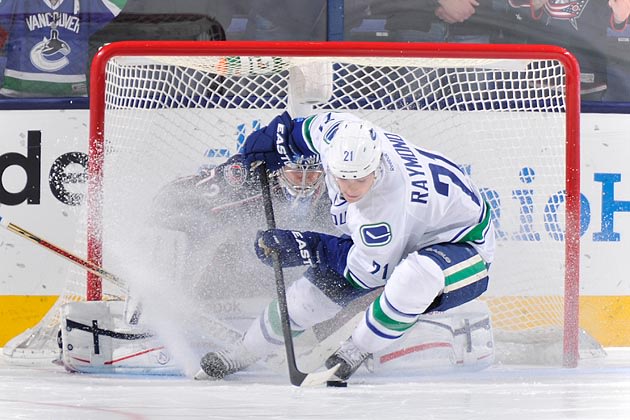
We’ve been debating its validity for years, and every month brings another moment of controversy, with Mason Raymond’s attempt against the Columbus Blue Jackets as the latest. Despite not exactly in keeping with the “puck moving forward at all times” thing, the NHL allows them as long as the move “involves continuous motion.”

Eliminate the spin-o-rama, and you eliminate a vast majority of the controversies we have in the shootout.
(But, again, the skills competition is such a ridiculous exercise in artifice that players should be able to shoot three pucks at the same time while firing a blow torch at the goalie’s face. You know, for entertainment’s sake.)

2. Hybrid Icing

For the uninitiated, this would transform icing into a race to the hash marks in the defensive zone; icing would be called as soon as the defensive player has the advantage – or is even – in the race to the end boards. No more shoves from behind or femur-shattering collisions at rink’s end.

It’s something that GMs like Steve Tambellini and especially Chuck Fletcher see as a common sense move, and it is: Hybrid icing helps prevent potentially catastrophic injuries while maintaining the visceral thrill of two players desperately chasing the puck. We’re still not sure how there’s opposition to that.

Speaking of icing …

3. Enough With Sneaky Delays of the Game

Every team knows how to earn its exhausted players some extra time to rest, whether it’s a goalie that needs an “equipment adjustment” or a player spending an extra second or 10 on the ice after an “injury.”

One trend in the NHL that’s been bugging me is on icing calls. It’s when teams empty their benches with players on a line change that legally can’t happen now that the defending team has iced the puck.

But rather than have five exhausted players immediately report to the faceoff dot near their goaltender to do the dance again, on-ice officials have to comb through a group of players to determine who needs to remain on the ice or back on the bench.

It’s a sneaky little move that I’ve seen employed by coaches like Peter Laviollette of the Philadelphia Flyers and Guy Boucher of the Tampa Bay Lightning, and has its roots in the mind of the late Roger Nielsen, that mad genius of rule-bending.

Defensive exhaustion leads to offensive chances. There’s no more established truth in hockey than that. So giving defensive players that extra time as this line change is sorted out is counter-intuitive to the icing rule that, frankly, is one of the better ones the NHL has passed.

Hit’em with a delay of game minor. Now we’re talking instant offense.

Of course, it doesn't stop there. As Jesse Spector noted on The Sporting News, teams are buying time in the faceoff dot as well by using wingers to take draws only to get tossed out of the circle:
“On every icing, the winger goes in (for the draw) and gets thrown out on purpose,” Islanders coach Jack Capuano said. “You see that everywhere you go. He’s getting thrown out so the center can take the draw and it buys five more seconds (after a team is not allowed to make a line change following an icing). That should be a rule that they should look at. That happens all the time. The officials, if they see something, a guy cheating once or twice, they’ve got to throw him out. I’ve got no problem with it.”
It's all a sneaky little delay.

Speaking of delay of game …

4. ‘Common Sense’ Puck Over The Glass

The moment I realized the “puck over the glass” delay of game penalty was idiotic was when I witnessed Matt Cooke of the Pittsburgh Penguins get a 2-minute minor after he shot the puck from his own end over the glass at the other end of the rink. Because, you know, that’s exactly where players are going to put the puck to delay the game. Yup.

Down Goes Brown picked apart this rule rather adeptly on Grantland, but came to the same conclusion I have:

The NHL wants more offense, but they can’t seem to figure out how to accomplish that at even strength. So why not add a nonsensical penalty that seems to have been specifically designed to create more power-play goals? Scoring goes up a little, everyone high-fives, and if we’re lucky nobody will mention that the rule is completely arbitrary and unfair.
In summary: It’s a rule that probably isn’t going to change, despite being awful, because it creates offense. And I’ve heard from enough coaches and GMs that are convince that it has actually decreased intentional pucks over the glass, whether or not that was an epidemic to begin with.

So if the rule isn’t going anywhere, let’s at least inject some common sense into the rule: Amend Rule 63.2 to give the referee some level of discretion on whether a player intentionally cleared the puck over the glass or simply misfired it.

We all see the games. We all know the difference. If you’re beef is that this turns referees into mind-readers … well, then we might as well take boarding majors away from them too.

5. Coach’s Challenge


As we’ve written this year: It’s beyond time for a limited coach’s challenge in the NHL. The technology is there to make reviews of plays efficient. The need is there for some check or balanced to be in place for game-changing calls like goalie interference on a scoring play or high-sticking double-minors in which one teammate cuts another.

As long as we limit them to one per game with consequences for teams that waste our time – a delay of the game minor, for example – they won’t become egregiously used.

What do you want to see the GMs recommend this week?